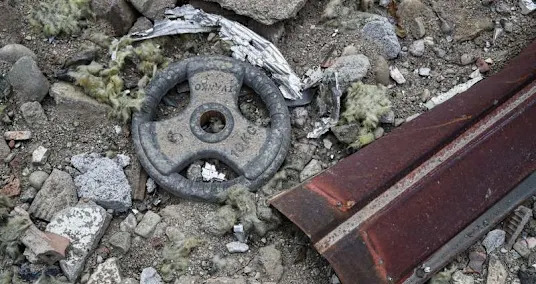
The Israeli military has said that Iran’s weapons production capabilities will be largely destroyed "within a few days."
Over the coming days, the military aims to "complete their attacks on all key components of the [Iranian] military industry," army spokesman Effie Defrin told journalists on Saturday evening.
"This means that we will have destroyed most military production capabilities," he added.
"It will take the regime a long time to rebuild them."
Since Israel and the US began to attack Iran four weeks ago, the Israeli Air Force has been carrying out heavy strikes on Iran's military industry.
The Israeli military estimates that it has already struck around 90% of the key facilities in the Iranian arms industry, according to the Times of Israel.
Israeli fighter jets also bombed military production facilities in Iran overnight, including the headquarters of the Marine Industries Organization which is responsible for the development and construction of warships and submarines.
LATEST POSTS
- 1
 Wizz CEO: We’re going to invest $1 b. in Israeli market
 - 2The new queen of country music has no scandals and no gimmicks — and just broke a record set by Taylor Swift
- 3German finance minister sees advantages of smartphones in schools
- 4Discovery of ancient pleasure boat reveals Egypt's maritime history
- 510 Famous Frozen yogurt Flavors All over The Planet




- 12 times rockets and spacecraft crashed and burned in 2025
- Watch India launch advanced military satellite on rocket's 1st flight since May 2025 failure
- Pfizer says patient dies after receiving hemophilia drug in trial
- Full SNAP benefits must be paid ‘promptly,’ USDA tells states as government reopens
- Former school bus aide pleads guilty to assaulting 3 autistic students in Colorado
- 21 Things You Ought to Never Share with Your Childless Companion
- Mom finds out she has cancer after noticing something was off while breastfeeding
- Barry Manilow reveals lung cancer diagnosis and plans to undergo surgery: 'It's pure luck' it was 'found so early'
- Kissing is an ‘evolutionary conundrum.’ Scientists just mapped its unexpected origins